
Message
leave a message
If you are interested in our products and want to know more details,please leave a message here,we will reply you as soon as we can.

Certificate Verification

Enter a Certificate Number to verify an official KOODSUN authorization.
Our system will confirm whether the distributor or dealer is authorized by KOODSUN.

Please enter the code and click search.

  • 180kWp Solar + 482kWh Battery Storage Project for a Manufacturing Factory in Ukraine
    November 04, 2026
    180kWp Solar + 482kWh Battery Storage Project for a Manufacturing Factory in Ukraine

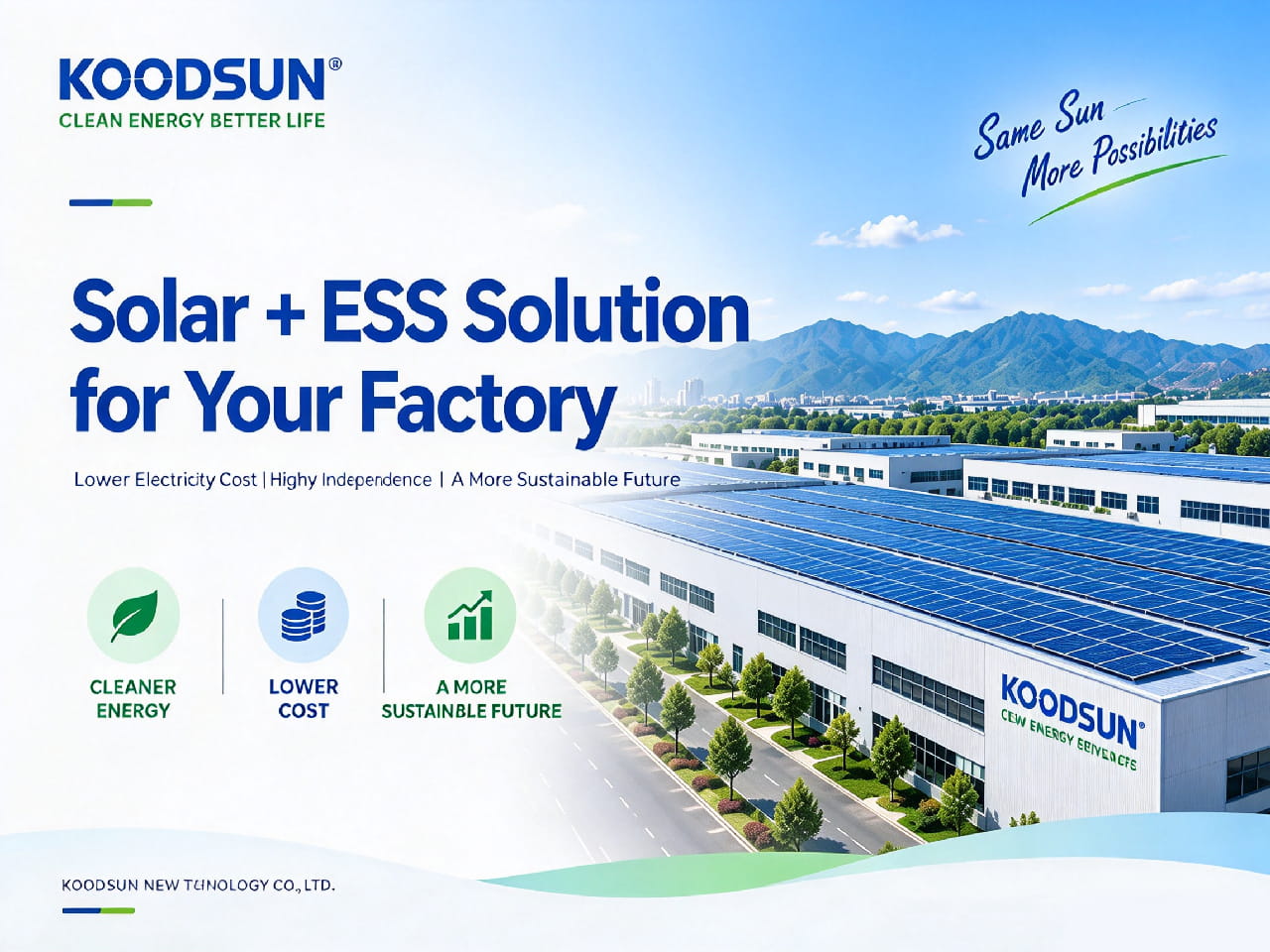
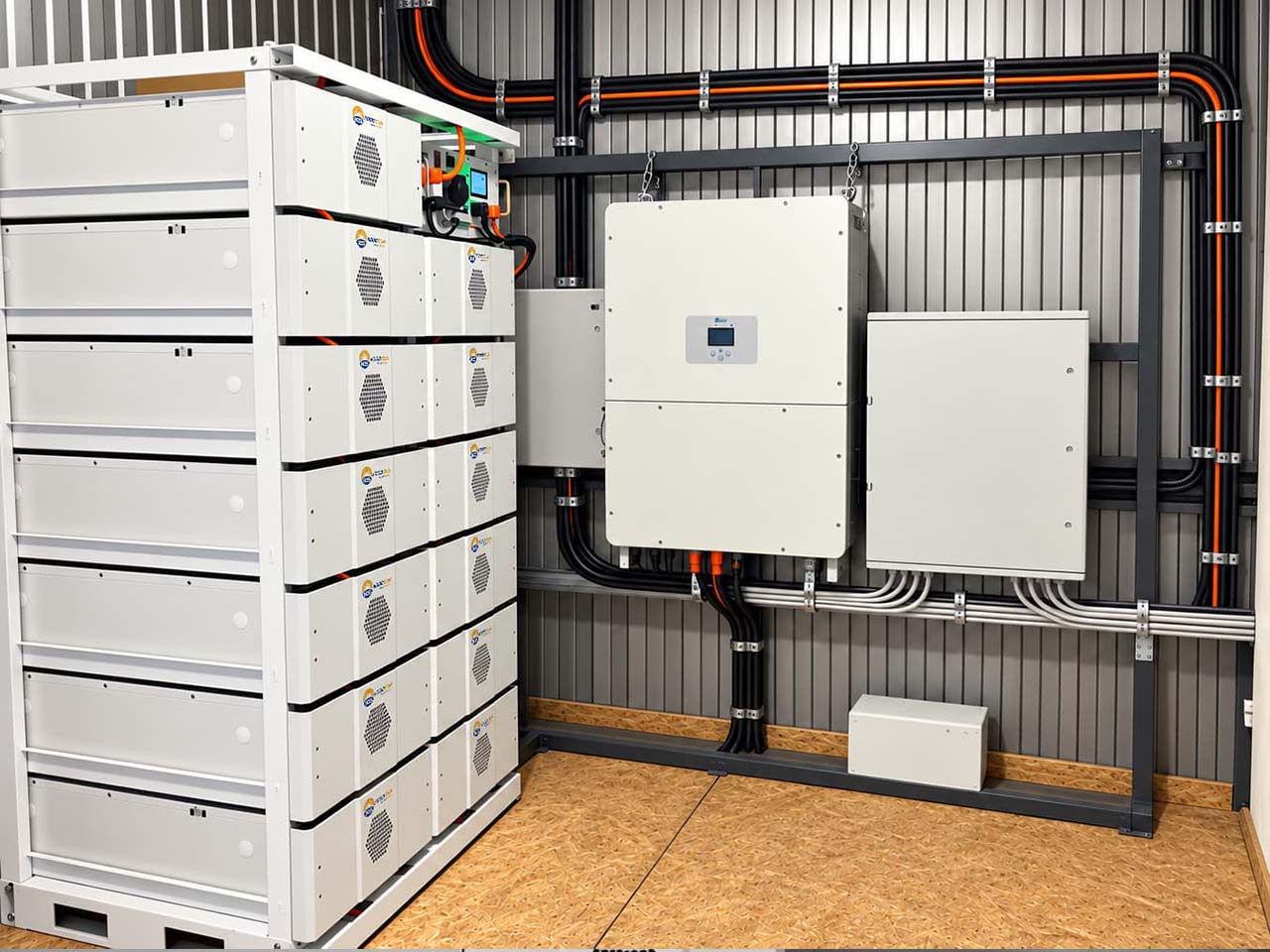
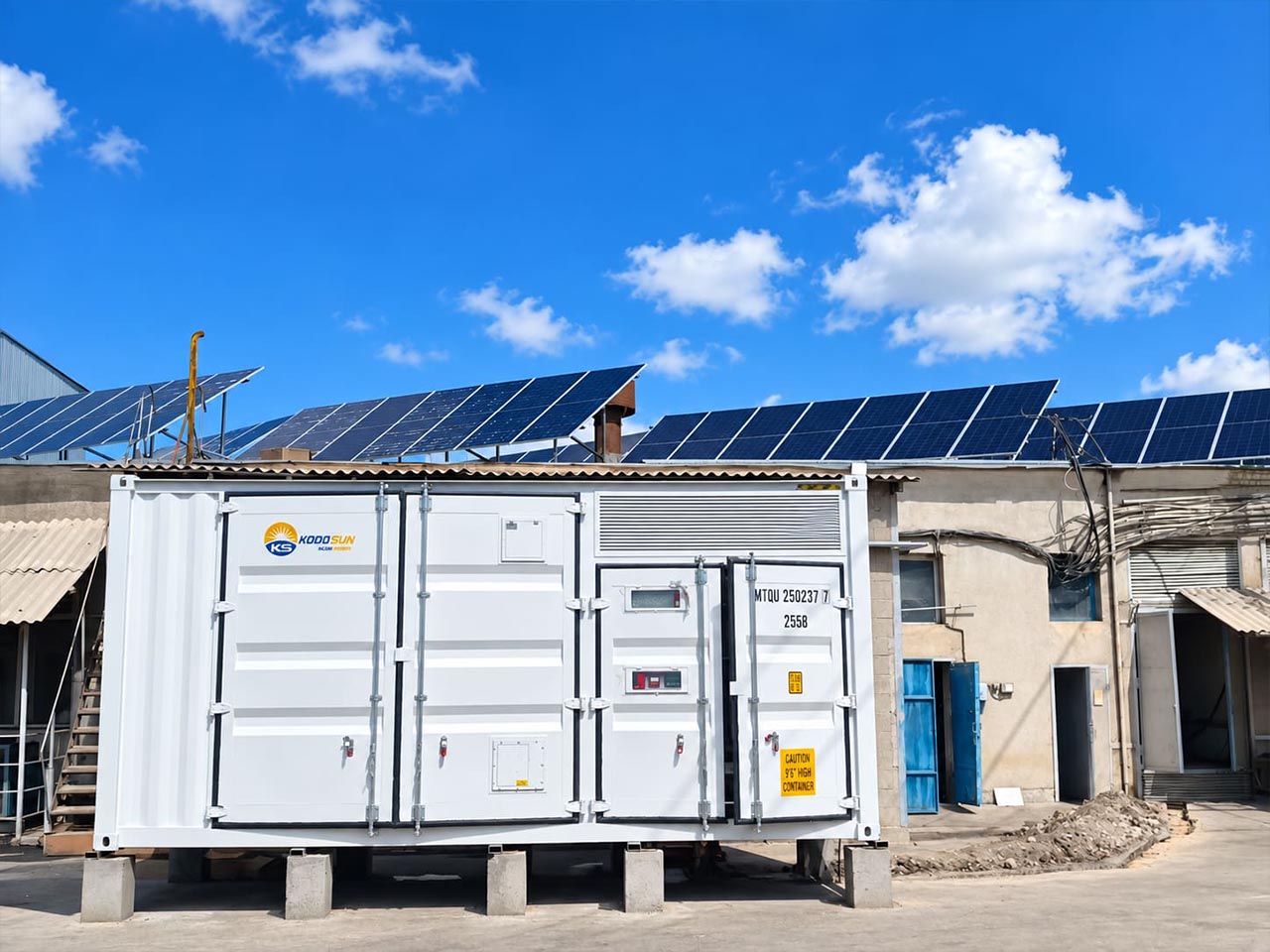
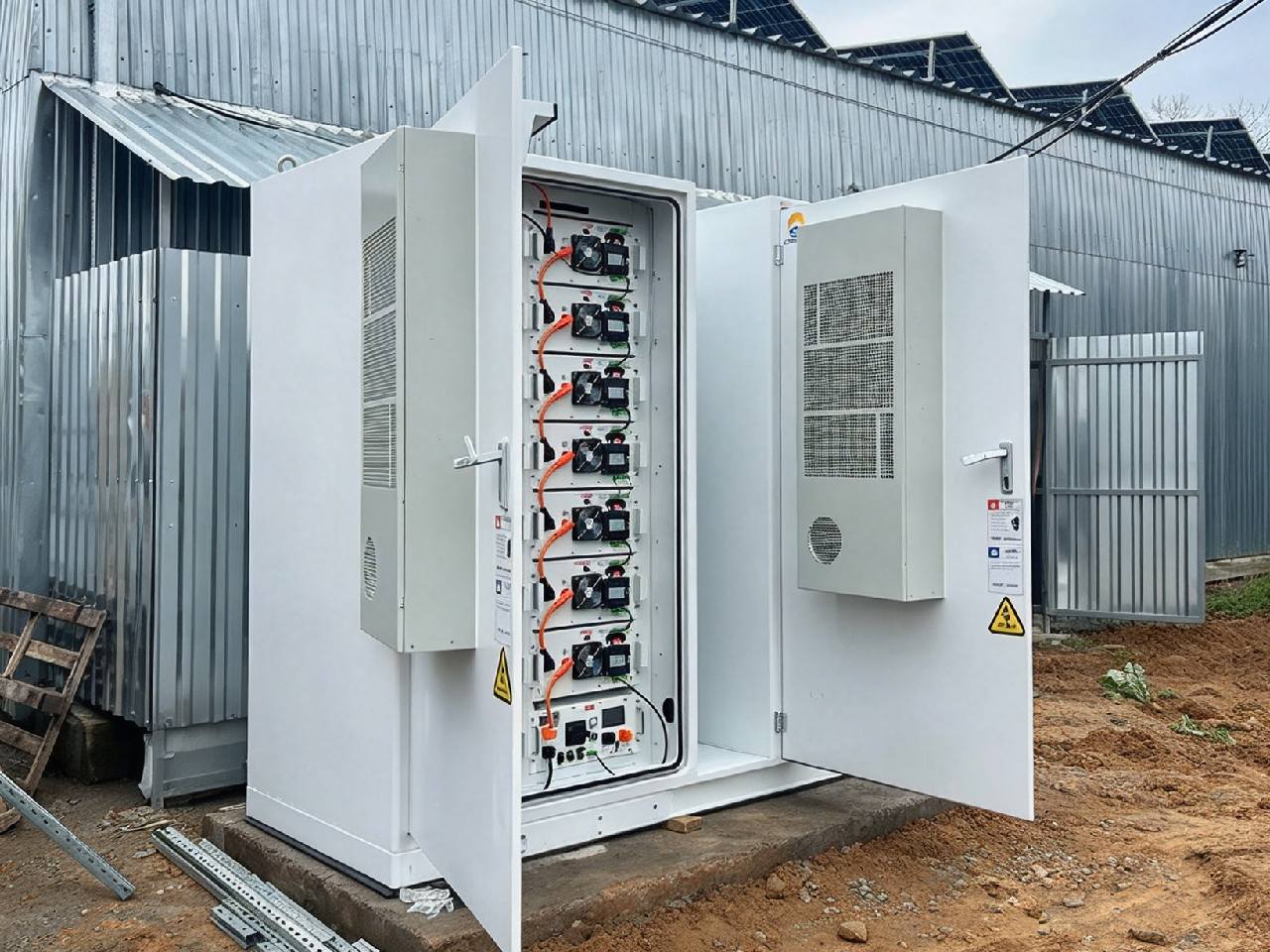
    A Commercial & Industrial ESS Project by KOODSUN Category: Industrial Solar & Energy Storage ProjectLocation: UkraineApplication: Mechanical Processing Factory 1. Project Overview As industrial electricity costs rise and power supply reliability becomes increasingly important, manufacturers are looking for ways to improve energy independence while maintaining stable production. KOODSUN recently completed a solar-plus-storage project for a mechanical processing factory in Ukraine, combining a 180kWp solar PV system, two 60kW hybrid inverters, and 482kWh of LiFePO₄ battery storage. The project uses two 241kWh air-cooled outdoor ESS cabinets to store surplus solar energy and make it available when solar generation is insufficient or additional power support is required. The system was designed around the factory's industrial electricity requirements, with three main objectives: Increase on-site solar energy utilization. Reduce dependence on grid electricity through battery energy storage. Provide additional power supply support during grid interruptions. Rather than installing solar panels alone, this project combines solar generation, hybrid power conversion and battery storage into an integrated energy solution. 2. Project Configuration at a Glance Component System Configuration Project Location Ukraine Application Mechanical Processing Factory Solar PV Capacity 180kWp Hybrid Inverters 2 × 60kW Total Inverter Capacity 120kW Battery Storage 2 × 241kWh Total Battery Capacity 482kWh Battery Chemistry LiFePO₄ ESS Cabinet Type Outdoor Air-Cooled Cabinet Protection IP54 Operating Temperature -20°C to +45°C Nominal DC/AC Ratio 1.5 Commissioning Q3 2026 The battery system provides 482kWh of nominal energy storage. At a 90% depth of discharge (DoD), the theoretical available energy is approximately 434kWh, subject to the battery's operating limits and system settings. 3. System Architecture: 180kWp PV + 120kW Hybrid Inverters + 482kWh ESS The project consists of three main components: solar PV generation, hybrid inverter conversion and lithium battery storage. 3.1 180kWp Solar PV System The 180kWp solar array serves as the primary renewable energy source for the factory. During daylight hours, solar electricity can support the factory's operating loads. Depending on the actual production schedule and energy management settings, surplus solar generation can also be used to charge the battery system. The 180kWp PV capacity compared with the combined 120kW inverter rated power gives a nominal DC/AC ratio of 1.5. This configuration is intended to balance solar energy generation with inverter capacity and battery charging requirements. Actual PV input allocation and power clipping depend on the selected inverter's maximum PV input specifications, MPPT configuration and operating conditions. 3.2 Two 60kW Hybrid Inverters The system uses two 60kW hybrid inverters, providing 120kW of combined rated AC power. The hybrid inverters coordinate the energy flow between the solar PV system, battery storage, factory loads and utility grid, according to the system configuration. Their main functions include: Converting solar DC electricity into AC electricity for factory consumption. Managing battery charging from available solar energy. Discharging stored battery energy when required. Coordinating grid interaction and configured backup operation. Using two inverter units also provides a modular system configuration, allowing the project to be arranged around the site's power distribution and installation requirements. For industrial applications, inverter selection must consider not only rated power but also motor starting current, overload capability, three-phase requirements and backup operating characteristics. 3.3 482kWh Air-Cooled LiFePO₄ Battery Storage The battery system consists of two KOODSUN 241kWh air-cooled outdoor ESS cabinets. <Insert product image: KOODSUN 241kWh Air-Cooled Outdoor ESS Cabinet> Together, the two cabinets provide 482kWh of nominal energy storage. Key product features include: LiFePO₄ battery chemistry. Integrated Battery Management System (BMS). Air-cooled thermal management. Outdoor cabinet design. IP54 enclosure protection. Designed operating ambient temperature range of -20°C to +45°C. The air-cooled design offers a practical solution for industrial customers who need outdoor battery deployment without the additional liquid-cooling circulation system. Each cabinet integrates battery modules and the associated battery protection and management components, simplifying the installation of modular storage capacity. 4. How Does the Solar + ESS System Work? The main purpose of this project is to improve the factory's energy utilization by combining solar generation with battery storage. The system can operate through several energy management strategies, depending on grid availability, solar production and factory demand. Mode 1: Daytime Solar Power Supply During the day, solar electricity is used to supply the factory's operating loads. When solar generation exceeds immediate consumption and the battery has available charging capacity, surplus energy can be stored in the ESS. Mode 2: Battery Discharging When solar production decreases, the battery can discharge to support factory electricity consumption. This allows the factory to make better use of energy generated earlier in the day rather than relying entirely on grid electricity. Mode 3: Peak Shaving and Time-of-Use Optimization The battery can be scheduled to discharge during selected periods of higher electricity demand or higher electricity tariffs. When the local tariff structure supports this strategy, the system can help reduce grid electricity consumption during targeted periods. The actual economic benefits depend on the factory's load profile, electricity tariff, battery operating strategy and round-trip efficiency. Mode 4: Backup Power During grid interruptions, the hybrid inverter and ESS can provide backup power to designated factory loads, subject to the inverter's backup configuration and available battery energy. For industrial facilities, the backup design must account for maximum demand, motor starting currents, load priority and the required backup duration. 5. Why Is This Configuration Suitable for a Mechanical Processing Factory? Mechanical processing factories have different electricity requirements from ordinary residential or commercial buildings. Their electricity consumption can vary significantly depending on production schedules and the equipment operating at any given time. Several factors are particularly important when designing an industrial solar-plus-storage system. Variable Industrial Loads Manufacturing equipment may include CNC machines, cutting machines, compressors, pumps and other electrically driven machinery. These loads can change throughout the production day. Therefore, system sizing should consider both average energy consumption (kWh) and maximum instantaneous power demand (kW). Motor Starting Requirements Some industrial motors require substantially higher current during startup than during normal operation. A suitable hybrid inverter must therefore be selected based on its overload characteristics and compatibility with the factory's motor loads. Electricity Cost Management For factories with suitable electricity tariff structures, combining solar generation and battery storage creates opportunities for self-consumption optimization and peak shaving. Instead of consuming all electricity directly from the grid, the factory can use solar generation and stored energy as additional electricity sources. Power Supply Resilience Grid interruptions can affect manufacturing schedules and production continuity. An appropriately configured ESS can provide backup power for selected equipment and critical production processes. The actual backup duration depends on the supported load and usable battery energy. 6. Why Choose Outdoor ESS Cabinets for Industrial Energy Storage? For commercial and industrial projects, outdoor ESS cabinets offer several practical advantages. Modular Configuration The use of two independent 241kWh cabinet units provides a total of 482kWh of nominal storage capacity. This modular approach offers flexibility in equipment placement and system installation. Integrated Battery Management The integrated BMS monitors battery operating conditions and manages battery protection. Outdoor Installation The IP54 outdoor enclosure is designed for installation in appropriate outdoor environments, subject to site preparation and installation requirements. Air-Cooled Thermal Management Air cooling avoids the liquid circulation and coolant maintenance requirements associated with liquid-cooled systems. For projects in colder climates, the battery's actual low-temperature charging and discharging limits, as well as any heating requirements, must also be considered during system design. 7. Key Considerations When Designing an Industrial Solar + ESS Project Every factory has a different electricity consumption pattern. Therefore, simply selecting a large PV array or battery capacity does not guarantee the best project economics. Before recommending a complete solution, KOODSUN evaluates several important factors: Daily electricity consumption: How many kWh does the factory consume per day? Maximum power demand: What is the highest simultaneous electrical load? Production schedule: Does the factory operate during the day, at night or continuously? Grid conditions: Is the system grid-connected, backup-oriented or designed for off-grid operation? Backup requirements: How many hours of backup power are required, and which loads must remain operational? Solar installation conditions: How much PV capacity can the available rooftop or ground area accommodate? Battery requirements: What storage capacity and discharge power are necessary? These factors help determine the appropriate combination of solar panels, hybrid inverters and battery storage. The Ukraine project demonstrates how a 180kWp solar array and 482kWh ESS can be combined into an industrial energy solution. However, the optimal configuration for another factory must always be determined by its actual electricity consumption and operating requirements. 8. Frequently Asked Questions About Industrial Solar + ESS Q1: What is the total battery capacity of this Ukraine project? The system uses two 241kWh outdoor ESS cabinets, providing 482kWh of total nominal battery capacity. Q2: How much usable energy can a 482kWh battery system provide? At 90% DoD, the theoretical usable energy is approximately 434kWh. Actual available energy depends on BMS limits, operating conditions and system configuration. Q3: Why does the project use 180kWp solar PV with 120kW of hybrid inverters? The nominal DC/AC ratio is 1.5. This design provides a larger PV generation capacity relative to the inverter's rated AC output. The final configuration must also comply with the inverter's maximum PV input and MPPT specifications. Q4: Can an industrial ESS operate during a grid outage? Yes, if the selected hybrid inverter supports the required islanding and backup functions and the system is configured accordingly. The supported load and backup duration must be verified during engineering design. Q5: Can KOODSUN customize an ESS solution for other industrial applications? Yes. KOODSUN provides customized battery storage solutions for manufacturing facilities, warehouses, agricultural projects, cold storage facilities and other commercial and industrial applications. Solutions can be configured according to the required inverter power, battery capacity, PV generation capacity and site operating conditions. 9. About KOODSUN – Industrial Battery Storage Manufacturer Anhui KOODSUN Technology Co., Ltd. is a manufacturer specializing in lithium battery products and commercial and industrial ESS solutions. Our product portfolio includes: Residential LiFePO₄ batteries. Low-voltage and high-voltage battery systems. Air-cooled outdoor ESS cabinets. Liquid-cooled outdoor ESS cabinets. Containerized BESS. Customized solar-plus-storage solutions. KOODSUN works with international distributors, EPC contractors, project developers and industrial customers to provide battery storage products and integrated energy solutions. From residential backup systems to large-scale industrial energy storage projects, our engineering team supports customers in selecting suitable battery capacity, inverter power and system configurations. Planning an Industrial Solar + ESS Project? If you are planning a solar and battery storage project for a factory, warehouse, agricultural facility or other industrial application, KOODSUN can help evaluate your requirements and develop a suitable solution. Send us the following information to receive an initial system recommendation: Project location and application. Daily electricity consumption (kWh). Maximum power demand (kW). Available solar PV capacity or installation area. Required battery backup duration. Grid voltage and phase. Contact KOODSUN to discuss your next commercial and industrial ESS project.

    Read More

  • 15kW Solar + 32kWh Battery Storage Project for a Factory in Argentina
    October 30, 2026
    15kW Solar + 32kWh Battery Storage Project for a Factory in Argentina

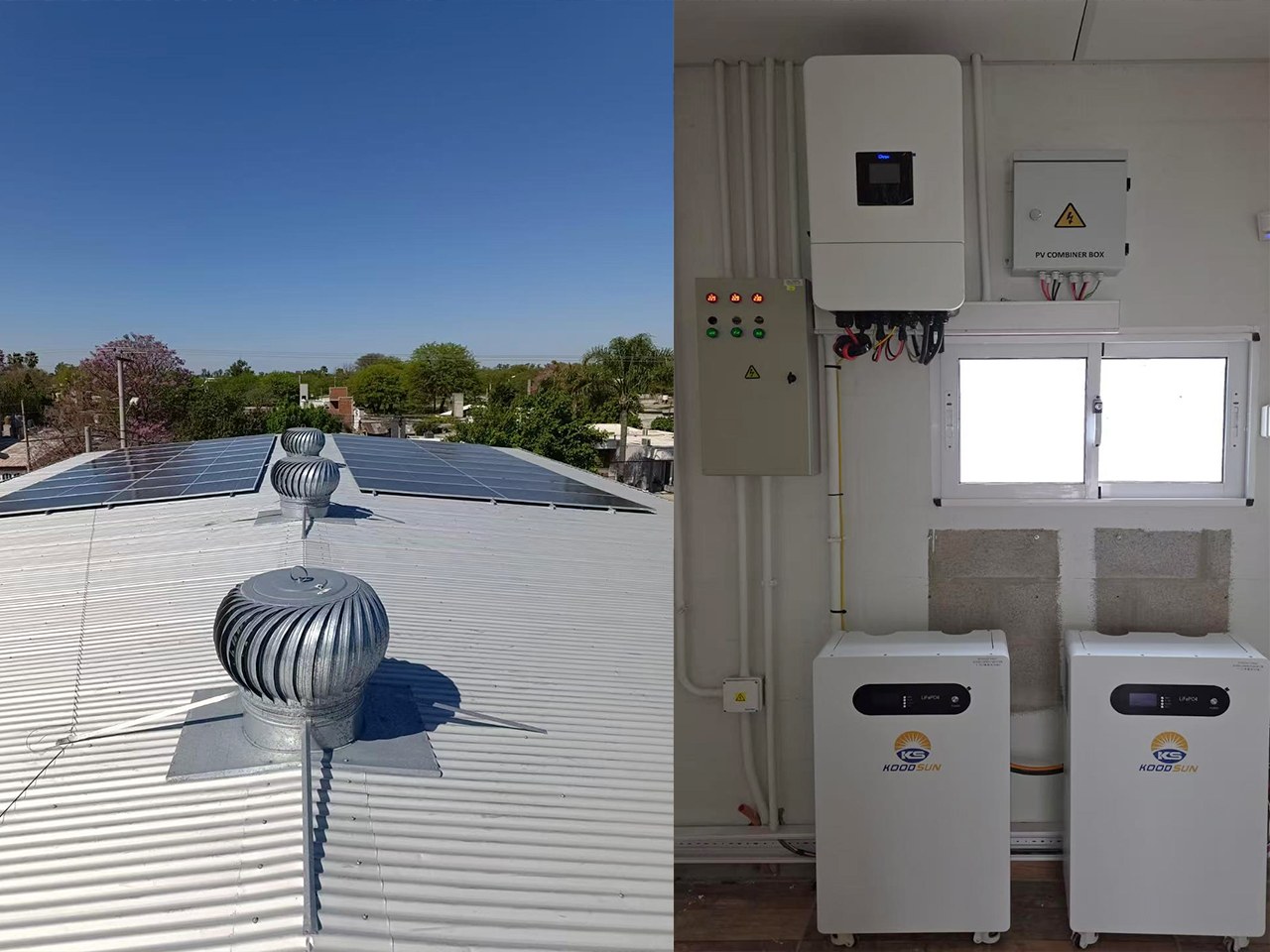
    Project Location: ArgentinaApplication: Factory Solar Power & Energy StorageSystem Type: Single-Phase Hybrid Solar ESS Project Overview KOODSUN recently supplied a solar and battery storage solution for a small factory in Argentina. The system combines a 15kWp solar PV array, a 12kW single-phase hybrid inverter, and 32kWh of KOODSUN LiFePO4 battery storage. Designed to support the factory's daily electricity consumption, the system integrates solar generation, battery storage, and grid power to improve energy flexibility and reduce dependence on grid electricity. System Configuration Equipment Configuration Solar Panels 15kWp Hybrid Inverter 12kW Single-Phase Battery Storage 32kWh KOODSUN LiFePO4 Application Factory Electricity Supply Project Location Argentina How Does the System Work? During the daytime, solar panels generate electricity to supply the factory's loads. Excess solar energy can be used to charge the batteries. When solar generation decreases or electricity demand increases, the battery storage system can provide additional power, depending on the operating settings and available battery energy. The hybrid inverter coordinates solar generation, battery charging and discharging, and grid interaction. Key Benefits Solar Energy Utilization: Make better use of daytime solar generation. Battery Backup: Provide additional power during grid interruptions, subject to system configuration. Energy Flexibility: Coordinate solar, battery, and grid electricity. Scalable Solution: A practical configuration for small factories and commercial facilities. KOODSUN – Your Solar Battery & ESS Manufacturing Partner From residential battery storage to commercial and industrial ESS solutions, KOODSUN provides LiFePO4 battery products and customized energy storage solutions for global customers. We support solar installers, distributors, EPC contractors, and project developers with reliable battery products and technical assistance. Looking for a solar and battery storage solution for your factory or business? Contact KOODSUN to discuss your project requirements.

    Read More
  • Battery Energy (Wh) vs. Capacity (Ah): What's the Difference?
    October 08, 2026
    Battery Energy (Wh) vs. Capacity (Ah): What's the Difference?

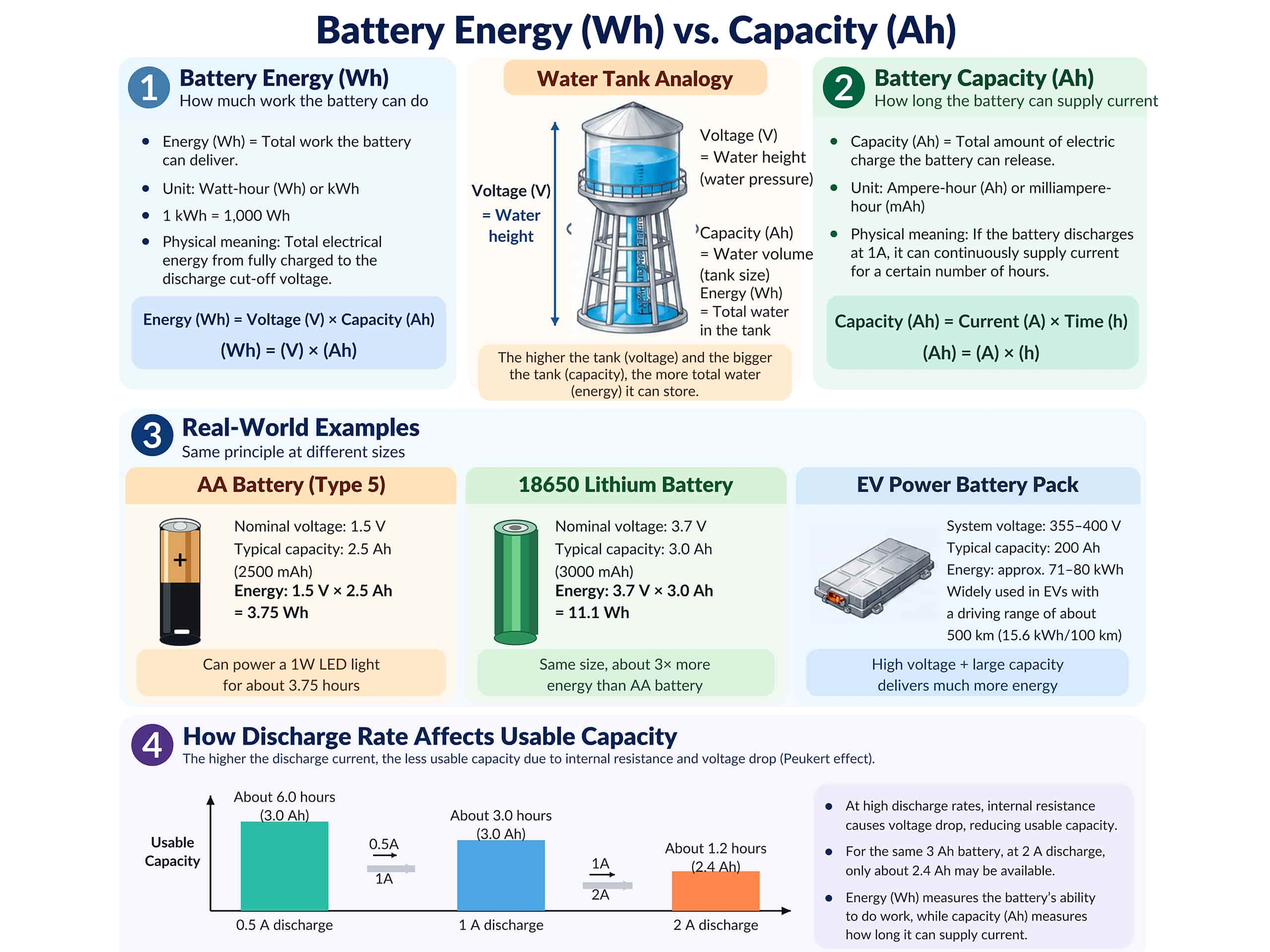
    When choosing a lithium battery, many buyers focus on its Ah rating. However, Ah alone does not tell you how much energy a battery can store. Understanding the difference between Wh and Ah helps you choose the right battery for your solar and ESS applications. 1. Battery Energy (Wh) Wh measures the total electrical energy stored in a battery. Formula: Energy (Wh) = Voltage (V) × Capacity (Ah) For example: 12V × 100Ah = 1.2kWh 24V × 100Ah = 2.4kWh 51.2V × 100Ah = 5.12kWh 102.4V × 100Ah = 10.24kWh The same Ah rating can represent different energy capacities depending on battery voltage. 2. Battery Capacity (Ah) Ah measures the amount of electrical charge a battery can deliver. Formula: Capacity (Ah) = Current (A) × Time (h) For example, a 100Ah battery can theoretically supply 10A for 10 hours or 20A for 5 hours. Actual performance depends on discharge rate, temperature and battery operating conditions. 3. How Does Discharge Rate Affect Battery Performance? Higher discharge currents can cause greater internal voltage drop and reduce usable capacity. Therefore, when selecting a battery, it is important to consider not only its rated capacity but also its continuous discharge current and power capability. 4. What Should You Check When Choosing an ESS Battery? Always consider these key specifications: Nominal voltage (V) Rated capacity (Ah) Total energy (kWh) Usable energy and DoD Continuous charge and discharge current Cycle life Conclusion Remember: Ah measures electrical charge capacity. Wh / kWh measures stored electrical energy. Voltage × Ah = Wh. At KOODSUN, we manufacture LiFePO4 batteries and provide low-voltage, high-voltage and complete ESS solutions for residential, commercial and industrial applications. KOODSUN – Reliable Battery Solutions for a More Sustainable Future.

    Read More
  • 40kW Solar + 30kW Deye Hybrid Inverter + 128kWh Battery Project in Cameroon
    September 29, 2026
    40kW Solar + 30kW Deye Hybrid Inverter + 128kWh Battery Project in Cameroon

    KOODSUN is pleased to share another successful residential solar + ESS installation in Cameroon, Africa. This system was designed for a large residential villa, providing solar power generation, energy storage, and reliable backup electricity. Project Configuration Solar Panels: 40kWp Hybrid Inverter: Deye 30kW Lithium Battery: KOODSUN 128kWh LiFePO4 Application: Residential Villa Location: Cameroon, Africa How Much Electricity Can This System Generate? Cameroon has favorable solar resources, making solar power a practical solution for residential and commercial applications. Based on an estimated 4–5 peak sun hours per day and an overall system efficiency of 80%, this 40kWp solar system can generate approximately 128–160kWh of electricity per day, depending on weather conditions, location, and system performance. The KOODSUN 128kWh lithium battery system allows excess solar energy to be stored during the day and used at night or during grid outages. Benefits of This Solar + ESS System This installation offers several advantages: Lower Electricity Costs: Reduce dependence on grid electricity by using solar power. Reliable Backup Power: Keep essential household appliances running during power outages. Energy Independence: Store solar energy for nighttime consumption. Flexible Energy Management: The Deye hybrid inverter manages solar generation, battery charging, and electricity supply. KOODSUN — Power Your Future This project demonstrates how KOODSUN LiFePO4 batteries can work with Deye hybrid inverters to provide practical solar + ESS solutions for residential properties. KOODSUN supplies lithium batteries and customized solar + ESS solutions for residential, commercial, and industrial applications worldwide.

    Read More
  • How to Add Battery Storage to an Existing Solar System
    September 09, 2026
    How to Add Battery Storage to an Existing Solar System

    Many factories and commercial buildings already have solar panels installed. However, without battery storage, excess solar energy may be exported to the grid or wasted through curtailment. Can you add batteries without replacing your existing solar inverters? In many cases, yes. 1. AC-Coupled ESS: Keep Your Existing Solar System One of the simplest ways to add battery storage is through AC coupling. System Architecture: Existing Solar Panels → Existing PV Inverters → AC Bus KOODSUN Battery → PCS → AC Bus AC Bus ↔ Factory Loads / Utility Grid This allows the existing solar system and the new ESS to work together. Main Benefits: Keep existing solar inverters Store excess solar energy for later use Reduce peak electricity demand Use stored energy during expensive electricity periods Support backup power when properly configured 2. Can the System Work During a Power Outage? Not automatically. Most conventional grid-tied solar inverters shut down when the utility grid fails. If backup power is required, the system may need a grid-forming PCS, EMS, switching and protection equipment, and compatible existing PV inverters. The complete system must be evaluated to ensure safe operation during a blackout. 3. What If You Want to Add More Solar Panels? If you plan to expand both solar and battery capacity, a hybrid solution may be suitable. For example: Existing PV → Existing Grid-Tied Inverters → AC Bus New PV + Battery → Compatible Hybrid Inverter → AC Bus This combines AC coupling with DC-side solar and battery integration. 4. How Do You Choose the Right Battery Capacity? Battery capacity should be based on actual electricity consumption, not simply on existing solar capacity. For example, a factory with 400kWp solar panels does not necessarily need a 400kWh or 1MWh battery. The correct ESS size depends on: Maximum load (kW) Daily electricity consumption (kWh) Daytime and nighttime energy usage Available excess solar generation Required backup hours Electricity tariffs and grid conditions These factors help determine the appropriate PCS power (kW) and battery capacity (kWh). 5. KOODSUN ESS Solutions KOODSUN provides high-voltage lithium batteries, outdoor C&I ESS cabinets and containerized BESS solutions for commercial and industrial applications. Whether you want to increase solar self-consumption, reduce electricity costs or add backup capability, we can help evaluate a suitable ESS configuration. Already Have Solar? Let's Add Storage. Send us the following information: Existing solar capacity (kWp) Inverter brand and model Grid voltage and frequency Maximum load (kW) Daily electricity consumption (kWh) Required backup time, if applicable KOODSUN can help you evaluate the appropriate battery capacity, PCS power and system architecture. Email: admin@koodsun.com WhatsApp: +86 18119685462 KOODSUN | Lithium Battery & ESS Solutions

    Read More
  • 100kW Solar + 208kWh Battery Storage Project in Somalia
    August 15, 2026
    100kW Solar + 208kWh Battery Storage Project in Somalia

    KOODSUN has completed a 100kW solar + 208kWh battery storage project in Somalia, combining solar generation, an 80kW hybrid inverter, and a modular high-voltage LiFePO4 battery system. The system is designed to provide approximately 500kWh of electricity per day, while approximately 200kWh of battery storage provides backup energy when solar generation is insufficient. This project demonstrates how solar power and ESS can work together to provide a more reliable and flexible electricity supply in areas where grid power is limited or unstable. Project Introduction Location: SomaliaSolar Capacity: 100kWHybrid Inverter: 80kWBattery Capacity: 208kWhBattery Configuration: 13 × 16kWh LiFePO4 Battery ModulesDaily Energy Supply: Approx. 500kWhBackup Energy: Approx. 200kWhSystem Type: Solar + ESSSolution Provider: KOODSUN 100kW Solar Power System The project is equipped with 100kW of solar panels, providing the main source of electricity during daylight hours. During the daytime, solar energy can directly supply the customer's loads while also charging the battery system when sufficient solar energy is available. Based on the project design and local solar conditions, the system can provide approximately 500kWh of electricity per day, helping the customer reduce dependence on conventional power sources. Actual daily solar generation may vary depending on weather, solar irradiation, seasonal conditions, and system efficiency. 208kWh High-Voltage Lithium Battery System The ESS consists of 13 × 16kWh LiFePO4 battery modules, providing a total battery capacity of: 13 × 16kWh = 208kWh The modular high-voltage battery system stores solar energy generated during the day and makes it available when needed. Approximately 200kWh of battery energy is designed to support the customer's backup power requirements, providing additional energy security when solar generation is insufficient or during nighttime operation. The modular design also makes the system easier to configure according to different project requirements. 80kW Hybrid Inverter An 80kW hybrid inverter manages the energy flow between the 100kW solar array, the 208kWh battery system, and the customer's electrical loads. During periods of sufficient sunlight, solar power can supply the loads and charge the batteries. When solar generation decreases, the stored battery energy can be discharged through the hybrid inverter to continue supporting the customer's loads. This allows the solar and battery systems to operate together as one integrated solution. Reliable Solar + ESS Solution for Somalia For projects in Somalia, solar power is not only about reducing electricity costs. A reliable and continuous electricity supply can be equally important. By combining: 100kW Solar PV + 80kW Hybrid Inverter + 208kWh LiFePO4 Battery the system provides the customer with approximately 500kWh of daily electricity supply, including approximately 200kWh of battery storage for backup. The combination of solar generation and battery storage allows the customer to use solar energy during the day while keeping stored energy available for periods when it is needed most. KOODSUN Complete Solar + ESS Solutions KOODSUN provides complete solar + ESS solutions for residential, commercial, and industrial applications. Our solutions include solar panels, hybrid inverters, high-voltage lithium batteries, outdoor ESS cabinets, containerized BESS, and complete system integration. For each project, we evaluate the relationship between: Maximum Load + Daily Energy Consumption + Solar Capacity + Inverter Power + Battery Capacity + Backup Time This allows us to recommend a system configuration based on the customer's actual electricity requirements rather than simply selecting a standard battery capacity. Planning a Similar Solar + ESS Project? If you are planning a solar + battery storage project in Somalia, Africa, or another market where reliable electricity supply is important, KOODSUN can help design a suitable solution. Send us your maximum load (kW), daily electricity consumption (kWh), required backup time, local grid voltage, and available solar installation area. Our team can recommend the appropriate solar capacity, hybrid inverter, and battery storage configuration for your project. Contact KOODSUN to discuss your Solar + ESS project.

    Read More
  • 500kW Solar + 1.2MWh Energy Storage Project in Germany
    July 31, 2026
    500kW Solar + 1.2MWh Energy Storage Project in Germany

    KOODSUN has delivered a 500kW solar + 1.2MWh battery energy storage project in Germany, combining rooftop photovoltaic generation with a containerized BESS for commercial and industrial energy use. The project integrates solar generation and battery storage to help the customer increase solar energy utilization, improve energy flexibility, and better manage electricity consumption. Project at a Glance Location: Germany Application: Commercial & Industrial Solar Capacity: 500kW Battery Storage: 1.2MWh Battery Type: LiFePO4 Storage Solution: Containerized BESS System Type: Solar + Energy Storage Solution Provider: KOODSUN 500kW Solar Power for Industrial Energy Demand The project is equipped with a 500kW rooftop solar system, allowing the customer to generate electricity directly from solar energy during the daytime. For commercial and industrial facilities, daytime electricity demand can be significant. Rooftop solar can supply part of this demand directly and reduce the amount of electricity drawn from the grid. However, solar generation and actual electricity consumption do not always occur at exactly the same time. This is why battery storage was integrated into the project. 1.2MWh Containerized Battery Energy Storage The project includes a 1.2MWh LiFePO4 battery energy storage system installed in a containerized configuration. The BESS allows available solar energy to be stored and used later according to the site's actual operating requirements. Depending on the energy management strategy, the battery can support applications such as: Increasing solar self-consumption Peak shaving Load shifting Reducing grid electricity consumption during selected periods Improving overall energy flexibility For a project of this scale, the containerized design provides a centralized and practical solution for integrating MWh-level battery storage into an industrial site. Solar and Battery Storage Working Together The key value of this project is the combination of 500kW solar generation and 1.2MWh battery storage. During periods of sufficient sunlight, solar energy can directly support the site's electrical loads. When solar generation exceeds immediate demand, available energy can be stored in the BESS. The stored electricity can then be discharged later when solar production decreases or when the site's energy management strategy requires battery support. In this way, the customer can make better use of the electricity generated by the rooftop PV system rather than relying only on real-time solar production. A Practical Solar + Storage Solution for C&I Applications Commercial and industrial facilities have very different electricity consumption patterns. Production schedules, peak demand, daytime and nighttime consumption, electricity tariffs and grid conditions can all influence the appropriate system configuration. Therefore, C&I ESS projects should be designed according to the actual energy requirements of the site. For this project in Germany, the combination of 500kW solar + 1.2MWh BESS provides the customer with a more flexible way to manage solar generation and electricity consumption. KOODSUN C&I Energy Storage Solutions This German project is another example of KOODSUN's solar + storage solutions for commercial and industrial applications. KOODSUN provides a range of ESS solutions, including: High-voltage battery systems, outdoor C&I ESS cabinets, containerized BESS, PCS + BESS solutions, and complete solar + storage systems. For each project, the PV capacity, PCS/inverter power and battery capacity can be configured according to the customer's load profile, available installation area and energy management requirements. Planning a Similar Solar + Storage Project? If you are planning a factory, warehouse, commercial building or other C&I solar + storage project, send us your basic project information, including: PV capacity, maximum load, daily electricity consumption, required battery capacity or backup time, and local grid voltage. KOODSUN can help evaluate the project and recommend a suitable Solar + PCS/Inverter + BESS solution.

    Read More
  • 30kW Solar ESS with 51.2kWh Lithium Battery Installed in Somalia
    July 11, 2026
    30kW Solar ESS with 51.2kWh Lithium Battery Installed in Somalia

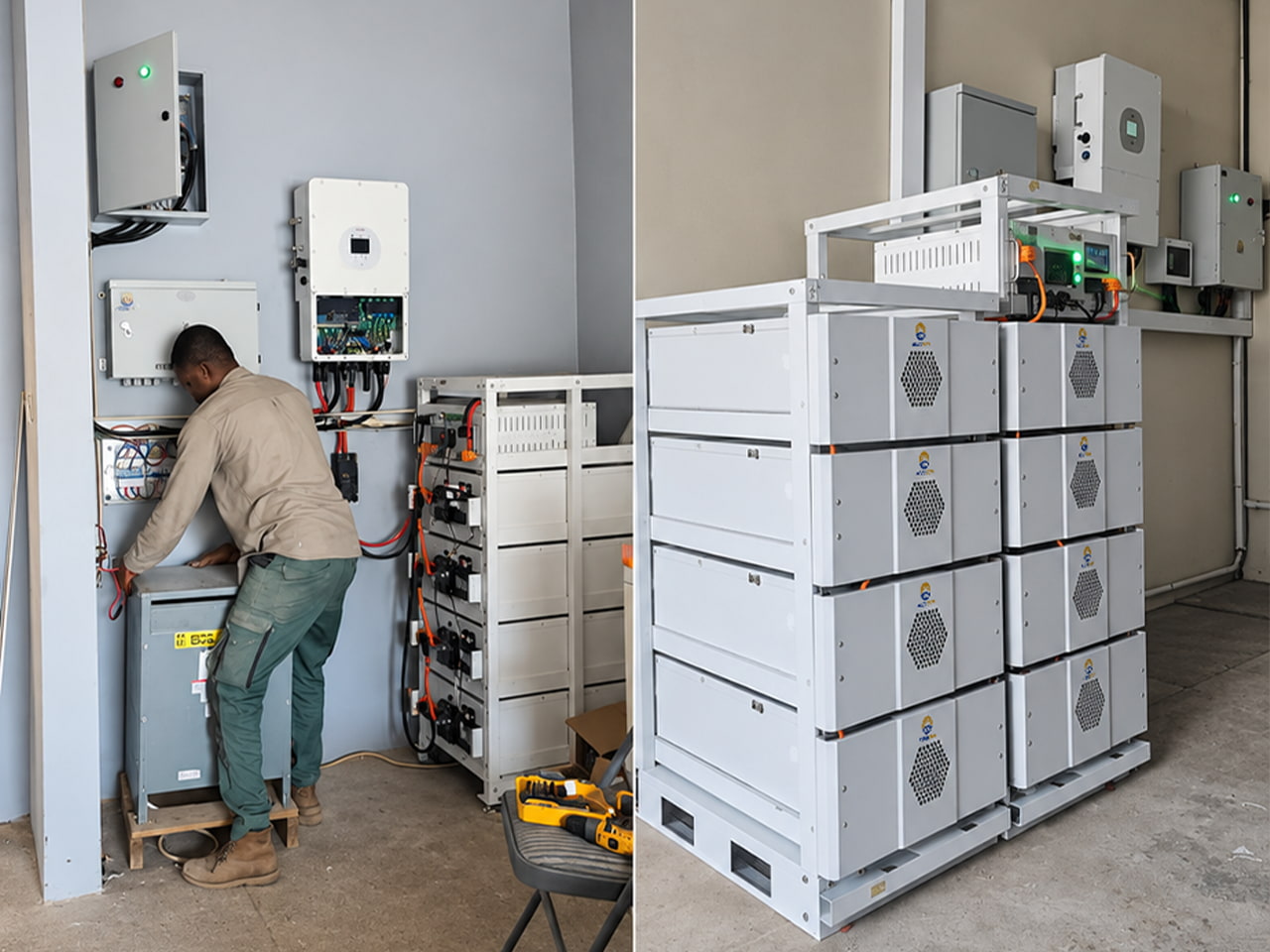
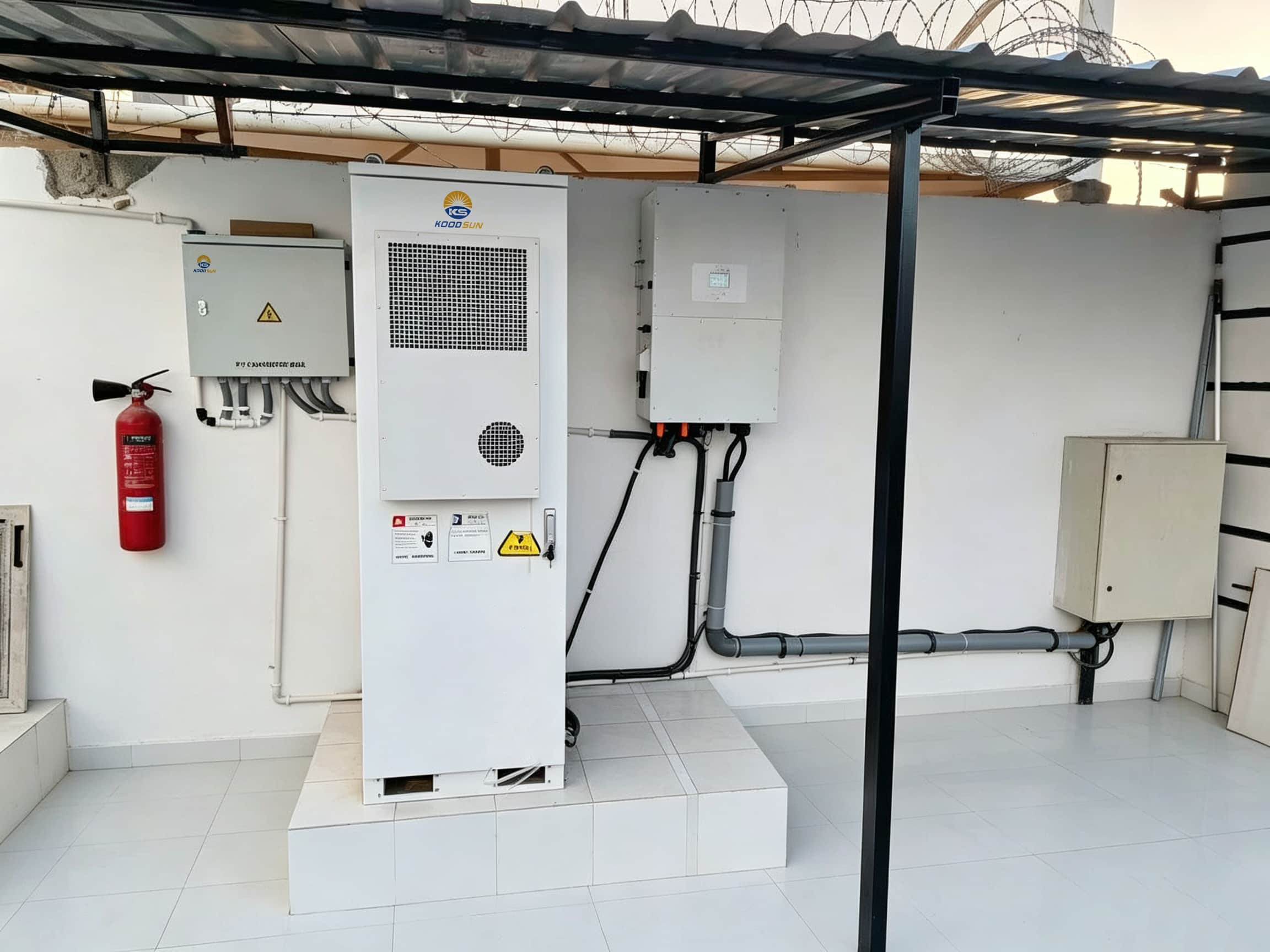
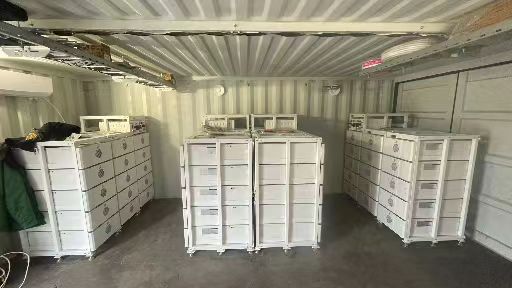
    KOODSUN has completed another solar ESS project in Somalia, providing a reliable power solution based on a 30kW inverter and 51.2kWh lithium battery system. The system uses an outdoor battery cabinet designed for commercial applications, helping the customer store solar energy and provide stable power when grid electricity is unavailable or unstable. Project Configuration Project Location: SomaliaSystem Type: Solar + ESSInverter Power: 30kWBattery Capacity: 51.2kWhBattery Type: LiFePO4 Lithium BatteryInstallation: Outdoor Battery CabinetApplication: Backup Power + Solar Energy Storage Why Solar + Battery Storage Is Important in Somalia In many areas of Somalia, reliable electricity remains an important consideration for homes and businesses. Diesel generators are commonly used as backup power, but fuel costs and ongoing generator operation can significantly increase long-term electricity expenses. A solar + battery system provides another option. During the daytime, solar energy can supply the load and charge the lithium battery. The stored energy can then be used when solar production is insufficient or when backup power is required. For this project, the 30kW inverter works together with a 51.2kWh LiFePO4 battery, creating a compact ESS suitable for small commercial and other distributed-energy applications. Outdoor Battery Cabinet for Easier Installation The 51.2kWh battery is integrated into an outdoor cabinet, creating a cleaner and more centralized installation. As shown in the completed project, the battery cabinet, inverter and electrical equipment are installed together in a dedicated area, making the overall system easier to manage and maintain. For projects in Africa and other markets with challenging environmental conditions, KOODSUN can provide outdoor ESS solutions with different battery capacities according to the required load and backup time. Flexible ESS Solutions from 30kW to Larger C&I Projects This 30kW + 51.2kWh project is one example of a relatively compact commercial ESS. For customers with larger electricity demand, KOODSUN can also provide scalable solutions including: 50kW / 100kW / 125kW hybrid systems 100kWh–500kWh C&I ESS 241kWh outdoor ESS cabinets MWh-scale containerized BESS Complete Solar + ESS + Generator hybrid solutions The system configuration can be selected according to the customer's peak load, daily electricity consumption, solar capacity, required backup hours and existing generator/grid conditions. KOODSUN ESS Projects in Africa KOODSUN focuses on lithium batteries and ESS solutions for residential, commercial and industrial applications. For projects in Somalia and other African markets, we can provide complete solutions covering lithium batteries, hybrid inverters/PCS, solar PV and system integration. If you are planning a solar + storage project, send us your: Load power + daily energy consumption + required backup hours + existing solar/generator information Our team can recommend a suitable ESS configuration for your project.

    Read More
  • Off-Grid or Hybrid? How to Choose a Home Solar + Battery System
    June 29, 2026
    Off-Grid or Hybrid? How to Choose a Home Solar + Battery System

    When choosing a home solar + battery system, the first step is to decide whether you need a Hybrid or Off-Grid system. The main difference is simple: Hybrid works with the utility grid, while Off-Grid is designed to operate independently from the grid. 1. Hybrid or Off-Grid? Hybrid Solar System A Hybrid system combines solar panels, battery storage, and the utility grid. Solar power supplies the home during the day and charges the battery. When solar and battery power are insufficient, the grid can provide additional electricity. Suitable for: Homes with grid connection Reducing electricity bills Backup during power outages Areas with an available but unstable grid Configuration:Solar PV + Hybrid Inverter + Battery + Grid + Home Loads Off-Grid Solar System An Off-Grid system operates independently from the utility grid. Solar and batteries are the main sources of electricity, and a generator can also be added as backup. Suitable for: Homes without grid access Remote houses and villas Farms and rural areas Areas with extremely unreliable grid power Configuration:Solar PV + Inverter + Battery + Home Loads 2. How to Size the System? A residential solar + ESS is mainly determined by four factors: Daily Consumption (kWh) → How much electricity you use every dayMaximum Load (kW) → Determines the inverter powerBackup Time (Hours) → Determines the battery capacityLocal Solar Conditions → Helps determine the required PV capacity 3. What Information Do We Need? To recommend the right system, simply provide: Country / LocationElectricity Bill or Daily ConsumptionMaximum LoadRequired Backup TimeGrid Voltage and Phase Based on this information, KOODSUN can recommend a suitable Solar PV + Inverter + LiFePO4 Battery solution. Planning Your Home Solar + ESS? Send us your basic electricity requirements, and our team will help you select a suitable solar + battery system for your home.

    Read More
  • 375kW Solar & 1MWh Storage Solution
    April 07, 2026
    375kW Solar & 1MWh Storage Solution

        Solis Empowers European Hospitality: 375kW Solar & 1MWh Storage Solution Set to Transform Luxury Hotel Energy Strategy Solis (Ginlong Technologies), a global leader in solar inverter technology, is proud to announce the successful deployment of a flagship commercial energy solution for a premier hotel project in Europe. By integrating three Solis 125kW high-efficiency inverters with a robust 1MWh Lithium Iron Phosphate (LFP) battery storage system, the project sets a new benchmark for sustainable tourism and energy independence in the region.   Bridging Luxury and Sustainability As energy costs fluctuate and environmental regulations tighten across Europe, the hospitality sector faces the dual challenge of maintaining 24/7 guest comfort while reducing carbon footprints. This project utilizes a sophisticated AC-coupled architecture, combining 375kW of solar precision with massive 1MWh energy reserves. The system is designed to capture maximum solar yield during daylight hours, storing excess energy to power the hotel’s heavy evening loads—such as HVAC systems, gourmet kitchens, and electric vehicle (EV) charging stations—long after the sun sets.   Technical Excellence: The Solis Edge The core of the installation features the Solis-125K-EHV-5G series, renowned for its: High Yield: 99.1% maximum efficiency and 10 MPPTs to navigate complex hotel roof structures or shading. Reliability: Type II SPD for both DC and AC protection, essential for protecting expensive hotel infrastructure. Smart Management: Seamless integration with the hotel’s Energy Management System (EMS) to facilitate Peak Shaving, significantly reducing high-demand grid fees during breakfast and dinner peaks.   Future-Proofing the Guest Experience "Beyond the financial savings, this 1MWh LFP battery integration ensures a 'Zero-Emission' stay for eco-conscious travelers," said [Name], [Title] at Solis. "In the event of grid instability, the system’s rapid response capabilities act as a critical backup, ensuring that guest services remain uninterrupted—a vital requirement for luxury hospitality."   Compliance and Safety Fully compliant with European grid standards (EN 50549-1) and rigorous fire safety certifications for LFP storage, this installation serves as a scalable model for mid-sized commercial enterprises across the continent. By choosing Solis, the project stakeholders have secured a bankable, long-term asset that transforms a standard utility expense into a strategic competitive advantage.

    Read More
  • KOODSUN participates in the Almaty Renewable Energy Exhibition
    April 02, 2025
    KOODSUN participates in the Almaty Renewable Energy Exhibition

    In April, KOODSUN participated in the Almaty Renewable Energy Exhibition. At this exhibition, we met new friends and visited local renewable energy companies. Beautiful Almaty left a deep impression on us.  

    Read More
  • 2MW Solar System Project( Anhui,China)
    April 03, 2024
    2MW Solar System Project( Anhui,China)

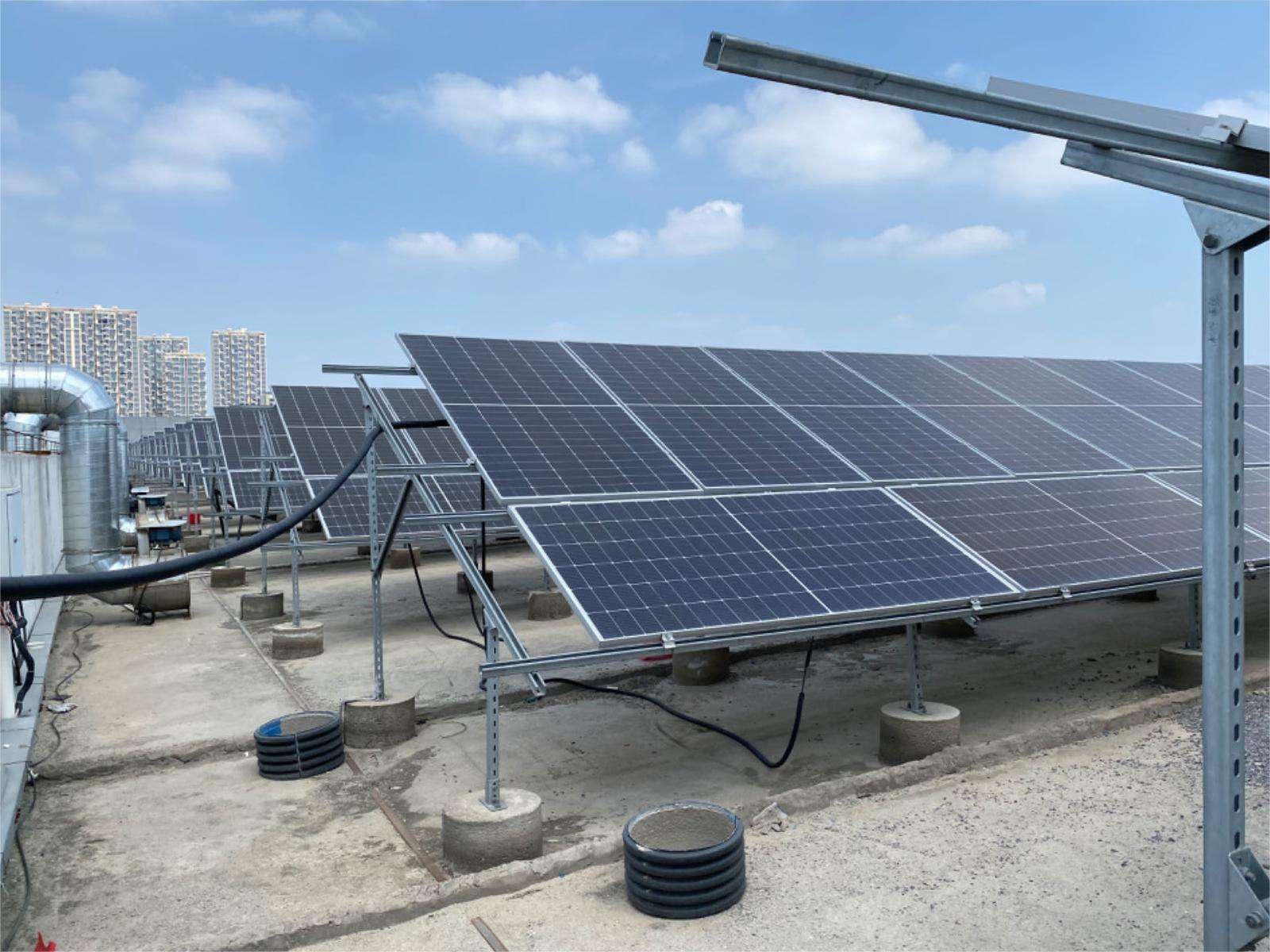
    A 2MW solar grid-connected system installed on the roof of a factory is a significant renewable energy solution for industrial settings. This system harnesses the power of the sun to generate clean electricity, which is then fed directly into the factory's internal electrical grid, reducing its reliance on non-renewable energy sources and lowering its carbon footprint. The installation consists of a large array of photovoltaic (PV) panels strategically placed on the factory roof to maximize exposure to sunlight. These panels convert solar radiation into direct current (DC) electricity, which is subsequently converted to alternating current (AC) electricity through inverters. This AC electricity is then seamlessly integrated into the factory's existing electrical system. The 2MW capacity of the system ensures a substantial amount of electricity generation, potentially meeting a significant portion of the factory's energy needs. This not only helps to reduce energy costs but also demonstrates the factory's commitment to sustainability and environmental responsibility. By utilizing this solar grid-connected system, the factory can benefit from reduced energy bills, decreased greenhouse gas emissions, and a positive impact on its corporate social responsibility profile. Additionally, with the long lifespan of solar panels and minimal maintenance requirements, this system provides a cost-effective and sustainable energy solution for years to come. In summary, a 2MW solar grid-connected system installed on a factory roof is a powerful demonstration of a commitment to sustainability, providing clean energy and significant cost savings while reducing the environmental impact of industrial operations.

    Read More

leave a message

leave a message
If you are interested in our products and want to know more details,please leave a message here,we will reply you as soon as we can.